
Quick answer
Board game manufacturing cost splits into five buckets: tooling, piece cost, decoration, compliance, and packing and freight. Only the first is one-time. Designers usually budget for tooling, underestimate decoration, and forget compliance and freight entirely. This article explains what drives each bucket and gives you a worksheet to model your own budget — but it deliberately contains no prices, because any number published without seeing your files is a guess, and section one explains why.
1. Why Nobody Can Quote You From a Description
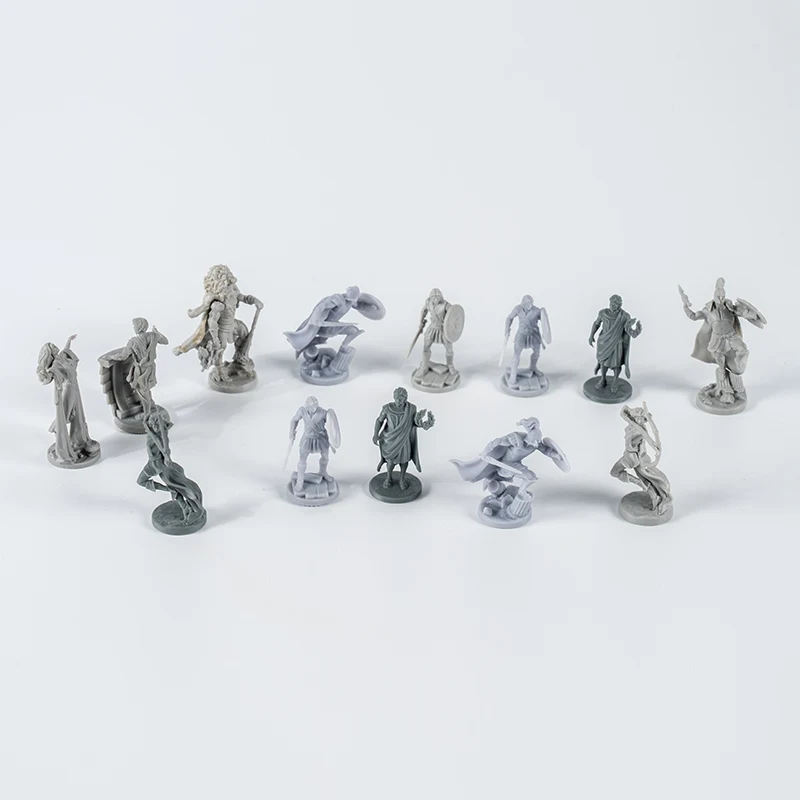
You will find articles that answer this question with a number. Treat them with suspicion. The honest position is that two figures described identically — "a 30 mm character miniature" — can differ in tooling cost by a large multiple, because one has a cape that locks into the steel and the other does not.
Price follows geometry, not category. A quote produced without your 3D file is either padded to cover the worst case or optimistic enough to require revision later. Neither helps you plan.
What we can give you instead is the structure. Once you know which variables move the number and by roughly how much leverage, you can budget sensibly, sanity-check any quote you receive, and — more usefully — change your design before it is expensive to change. This article sits under our complete guide to custom board game components manufacturing.
2. The Five Cost Buckets
| Bucket | Frequency | Scales with | Commonly underestimated? |
|---|---|---|---|
| Tooling | Once per mold | Part complexity and cavity count | No — this is the one everyone budgets for |
| Piece cost | Every unit | Part weight and cycle time | No |
| Decoration | Every unit, per colour, per surface | Number of print passes and hand handling | Yes — badly |
| Compliance and testing | Per market, per material | Destination regulations and SKU count | Yes — often forgotten entirely |
| Packing and freight | Every unit and every carton | Volume more than weight | Yes |
The pattern is consistent. First-time designers plan carefully for the bucket that arrives as a single alarming invoice, and get caught by the three that arrive quietly, per unit, across the whole run.
3. What Actually Drives Tooling Cost
Tooling is not priced by the size of your part. It is priced by how difficult the steel is to make and how long it takes to cut. Seven variables carry most of the weight.
- Undercuts. Any feature that would lock the part inside a rigid cavity needs a side action, a lifter or a collapsible core. Each one is a mechanism inside the tool. This is usually the single largest swing factor on a figure.
- Cavity count. More cavities cut the run time but multiply the machining. There is a crossover, and it depends on your quantity.
- Part complexity. Deep texture, fine engraved detail and thin standing features all take machining hours, whether cut on CNC or burned on EDM.
- Surface finish grade. A polished cosmetic face and a matte textured face are different amounts of hand work on the steel.
- Tolerance requirements. A card holder slot that must grip sleeved cards is tighter work than a decorative token.
- Mold base material and hardness. This sets how long the tool survives, which matters if you intend to reprint.
- Whether parts can share a tool. The largest lever available to most game projects — see section seven.
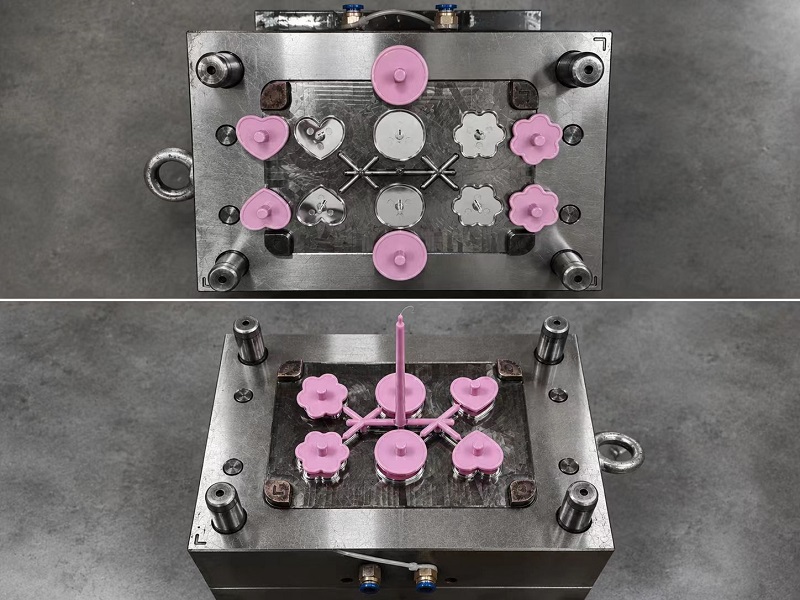
If your box contains eight distinct plastic pieces, do not assume eight tools. Small parts of similar wall thickness and the same material can frequently be combined into one family mold. This is the difference between a project that funds and one that does not.
4. What Actually Drives Piece Cost
Once the tool exists, each unit carries material, machine time and handling. Six things move that number.
Part weight sets your material consumption directly, and it is the one variable designers can influence most easily by hollowing or thinning where strength allows. Cycle time is mostly cooling time, and cooling is governed by the thickest section of the part — so one unnecessarily thick boss can slow down an entire run.
Material grade matters less than most people expect at game-piece scale, but it is not free. ABS, PP and acrylic behave differently in the mold and in the wallet. Colour count matters more than people expect: each colour is a machine changeover, and six player colours is six setups rather than one.
Cavity count divides machine time across more pieces per shot. And handling — degating, inspection, counting, bagging — is genuine labour that scales linearly with quantity and never benefits from volume.
5. The Costs Designers Forget
These are the line items that turn a comfortable budget into a difficult conversation with backers.
Decoration
Every printed colour is a separate pass, and every pass means a person picking the piece up, fixturing it, and putting it down. On a decorated figure, decoration can exceed the cost of molding it. Method is dictated by geometry — pad printing for curved surfaces, UV printing for flat faces — so you cannot simply choose the cheaper one.
Sampling and revision rounds
Budget for at least one. The T1 trial shot rarely produces a perfect part, and mold corrections after T1 are normal engineering rather than a supplier failure. Projects that plan for zero revisions are the ones that slip.
Compliance and testing
If your game is sold as a toy or reaches children in any market, the applicable safety requirements affect material selection and require testing. Testing is charged per material, per colour and per SKU family, which means a box with many distinct plastic parts costs more to test than one with few. Decide your destination markets before you finalise the parts list, not after.
Packing labour
Bagging pieces per player colour is a manual operation repeated once per copy of the game. It is invisible on a sample and very visible across a full run. Deciding between bulk packing and per-set bagging is a real budget decision.
Freight
Plastic game components are usually charged on volume rather than weight. A well-designed insert or tray that nests efficiently can pay for itself in shipping. Then add duties, which vary by destination and classification.
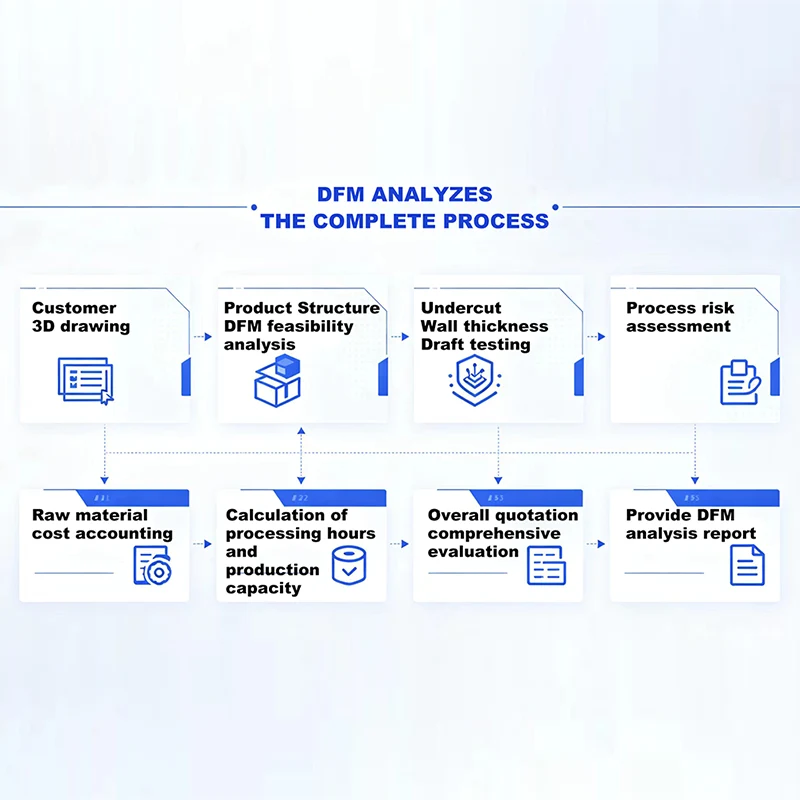
Cutting steel against a design that is not frozen. A change after tooling means mold modification or a new tool, and it stops the schedule dead. Approve the sculpt on a 3D printed sample and run DFM analysis before anyone quotes tooling — not after you have paid for it.
6. How to Read a Quotation Without Getting Caught
A quote is comparable only if you know what is inside it. Ask for these to be separated and stated explicitly.
- Tooling and unit price listed as separate lines, never merged
- Cavity count per tool, and which parts share which tool
- How many sampling rounds and mold corrections are included
- Whether decoration is in the unit price or quoted separately
- Whether packing labour is included, and to what packing spec
- Whether the price is ex-works, FOB or delivered
- Who owns the tooling, where it is stored, and who maintains it
- What happens on a reprint — is tooling charged again
A low headline unit price with tooling folded into it is not automatically dishonest, but it changes who owns the mold and what your second print run costs. Two quotes are only comparable when both are broken out the same way.
7. Seven Levers That Genuinely Lower Your Cost
- Combine parts into one toolThe highest-leverage move available. Group your parts by material and wall thickness before you assume separate molds.
- Design the undercuts outA cape reworked as a separate piece, or a pose adjusted so the sword clears the parting line, can remove a whole mechanism from the tool. This is what 3D model optimization is for.
- Even out wall thicknessCooling is governed by the thickest section. Removing one heavy boss shortens every cycle of the run.
- Reduce colour count where the game allowsEvery colour is a changeover. Five player colours instead of six is a real saving across a full run, and often invisible to the player.
- Size the run honestlyTooling amortises. Ordering a quantity that reflects your genuine sell-through, including a reprint you already expect, beats ordering twice at low volume. We cover the small-batch end of this in keeping costs low on a 1,000-unit board game.
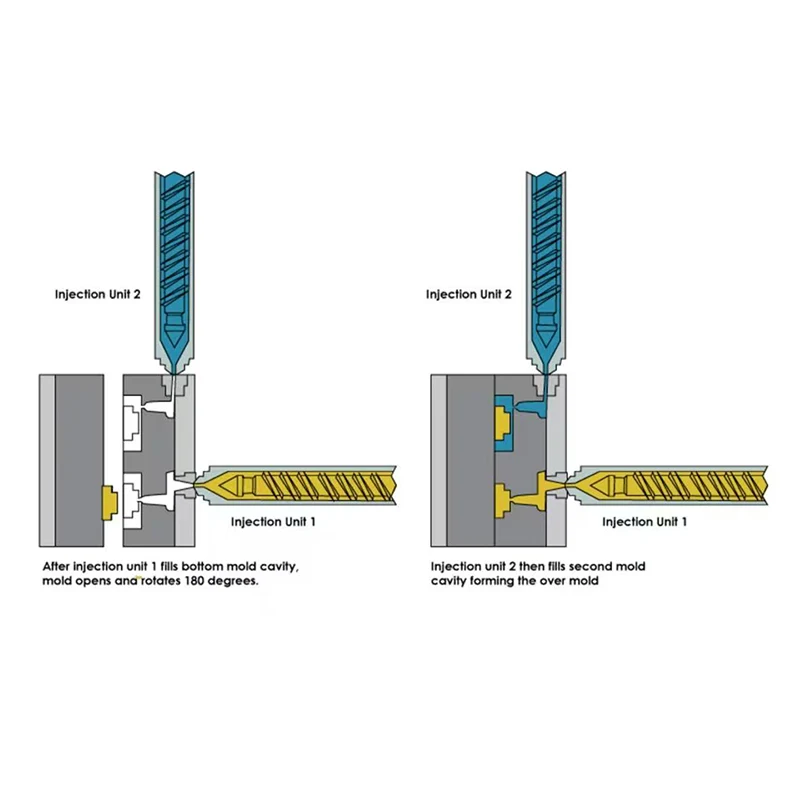
- Ask whether multi-colour molding can replace printingTwo colours molded in a single operation can sometimes remove a printing or spraying step entirely. It is not right for every part, but almost nobody asks.
- Freeze the design, then toolThe cheapest change is the one made on a printed sample. Every stage after that multiplies the cost of the same decision.
8. Build Your Own Cost Model Before You Ask for a Quote
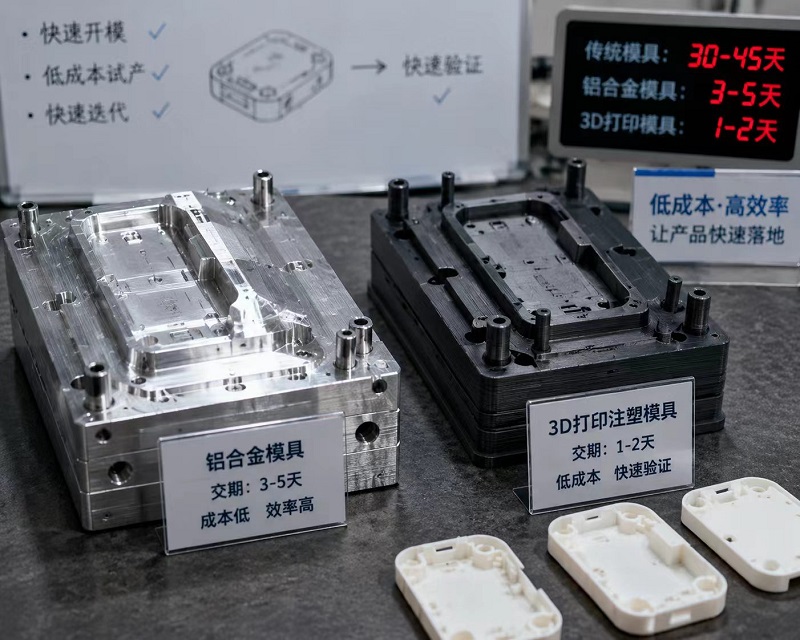
Copy this into a spreadsheet and fill it as quotes come in. It will tell you where your money actually goes, and it makes competing quotes comparable.
Board game component cost worksheet
Leave the figures blank until a supplier has seen your files. The value is in the structure.
| Line | Basis | Note to yourself |
|---|---|---|
| Tooling, per mold | One-time | List every tool separately. Which parts share it? |
| Mold corrections after T1 | One-time | Included in the quote, or extra? |
| Prototype and sampling rounds | One-time | How many are covered? |
| Piece cost × quantity | Per unit | Note the cavity count it assumes |
| Colour changeovers | Per colour | How many player colours do you truly need? |
| Decoration passes | Per unit, per pass | Which method, dictated by which surface? |
| Compliance testing | Per market, per material | Which destinations are confirmed? |
| Packing labour | Per copy of the game | Bulk, or bagged per player set? |
| Freight | Per volume | Does the insert nest efficiently? |
| Duties | Per destination | Classification confirmed? |
| Tooling ÷ quantity | Derived | This is your true amortised unit cost |
That last line is the one that matters. It is also the line that changes most when you consider a reprint, because on run two the tooling is already paid. If you are still deciding between molding, casting and printing, read our comparison of the three routes alongside this worksheet.
9. How We Quote at Kingke
Kingke is the brand of Ningbo Jinghe Plastic Industry Co., Ltd., founded in 2017 in the Haishu District of Ningbo, China. We run a 1,500 m² plant across four workshops with dedicated quality control, production and sales departments, and hold ISO 9001, ISO 14001 and ISO 45001 certification.
We quote from files, not descriptions. A DFM analysis and cost estimation report covers mold cost, molding cost, surface treatment, packing and logistics as separate lines, so you can see which bucket your money is in rather than receiving one number. Where the design carries mass-production risk, we say so before tooling rather than after. We have produced custom chess piece samples for a board game manufacturer working from their 3D drawings, and that sequence — files, DFM, printed sample, then steel — is how we prefer every project to run.
Two things about our plant matter specifically for cost on tabletop work. Our mold making is in house on CNC and EDM, so tooling revisions do not go out to a third party and come back a fortnight later. And our workshop is set up for rapid mold changeover with a partitioned layout, which is the practical reason a smaller run is viable here — changeover time is the real reason large plants dislike short runs. Alongside that we run robotic material handling and mold temperature control for shot-to-shot consistency, multi-colour injection molding, and in-house UV, screen and pad printing. Our machines run from 80T to 200T, which is the wrong range for automotive housings and the right one for board game plastic components. You can read more about our factory.
10. Frequently Asked Questions
How much does a board game injection mold cost?
There is no useful published answer, because tooling is priced by geometry rather than by category. The main swing factors are undercuts requiring side actions or lifters, cavity count, machining hours for fine detail, surface finish grade and tolerance requirements. Two miniatures described the same way can differ by a large multiple. Send the 3D file and we will price the actual part rather than a category average.
Why do two manufacturers quote very different prices for the same part?
Usually because they are quoting different things. One may assume a single-cavity tool and the other a multi-cavity tool. One may fold tooling into the unit price while the other lists it separately. One may include sampling rounds, decoration and packing labour where the other quotes those as extras. Before comparing, ask both to break out tooling, unit price, cavity count, included sampling rounds, decoration and packing on separate lines.
Is it cheaper to have a few large pieces or many small ones?
It depends on which bucket dominates. Fewer large pieces mean fewer tools but more material per unit and longer cooling. Many small pieces mean more geometry to tool, but small parts of similar wall thickness and the same material can often share a family mold, which spreads the tooling across several parts. Send the full parts list rather than one representative piece, because the answer comes from the combination rather than any single item.
Does adding more colours increase the cost?
Yes, in two separate places. Each moulded colour is a machine changeover, so six player colours means six setups rather than one. Each printed colour is an additional pass, and every pass means a person handling the piece individually. If the game design allows one fewer colour, the saving is real across a full run and players rarely notice. Multi-colour injection molding can sometimes combine two colours in a single operation and remove a printing step, which is worth asking about.
What is the cheapest way to produce 500 units?
At that quantity, tooling has very few units to spread across, so the honest answer is often not injection molding. 3D printing or resin casting may cost less in total even though each piece costs far more, because neither carries a tooling charge. The calculation changes completely if you expect a reprint, since tooling paid once serves every future run. Tell us your realistic total across all print runs rather than just the first, and we will tell you where the crossover sits.
At what stage should I ask for a quote?
As soon as you have 3D files, even rough ones, and before the design is locked. Early quoting is not about getting a firm price — it is about finding out which features are expensive while they can still be changed cheaply. A design review at concept stage frequently removes cost that would otherwise be built into the steel permanently. Waiting until the sculpt is final means you learn the price of your decisions after you can no longer revisit them.
Get your board game components costed properly
Send your 3D files, parts list and target quantity. You will get a DFM assessment and a cost estimate broken out by tooling, molding, surface treatment and packing — not a single number with no working shown.
Request a quote