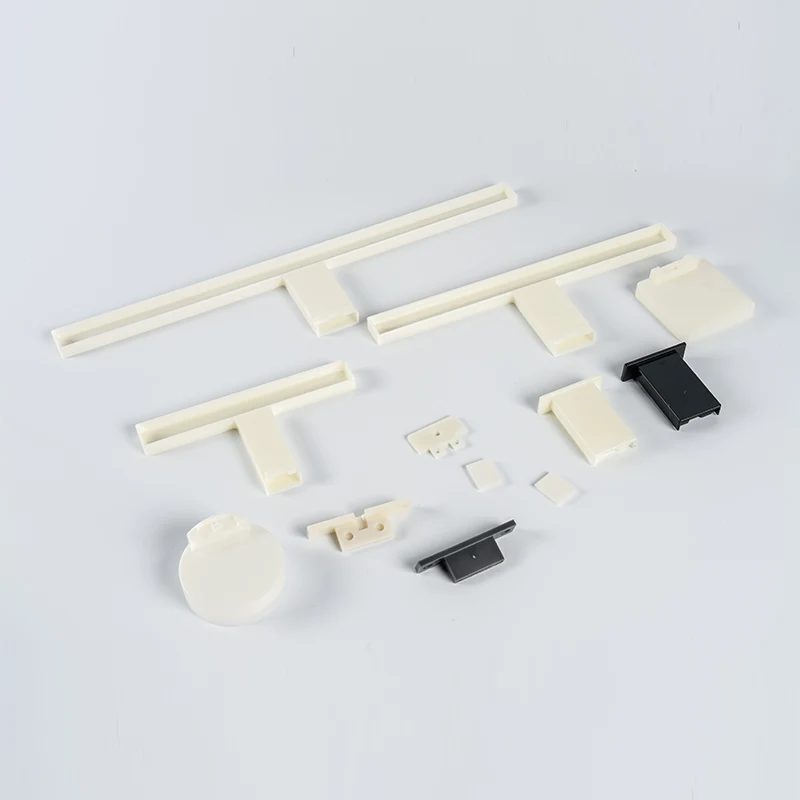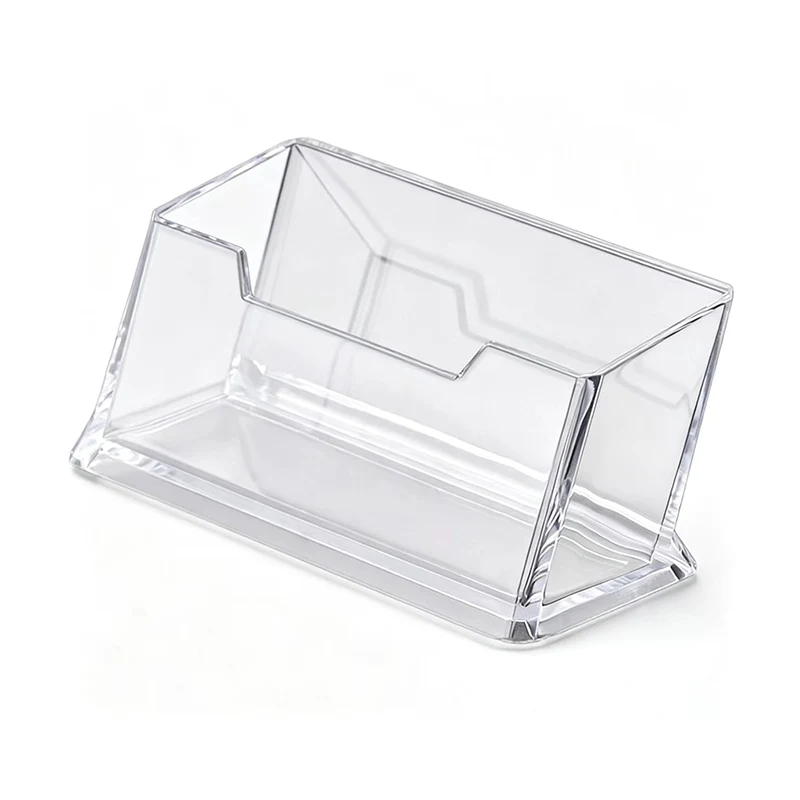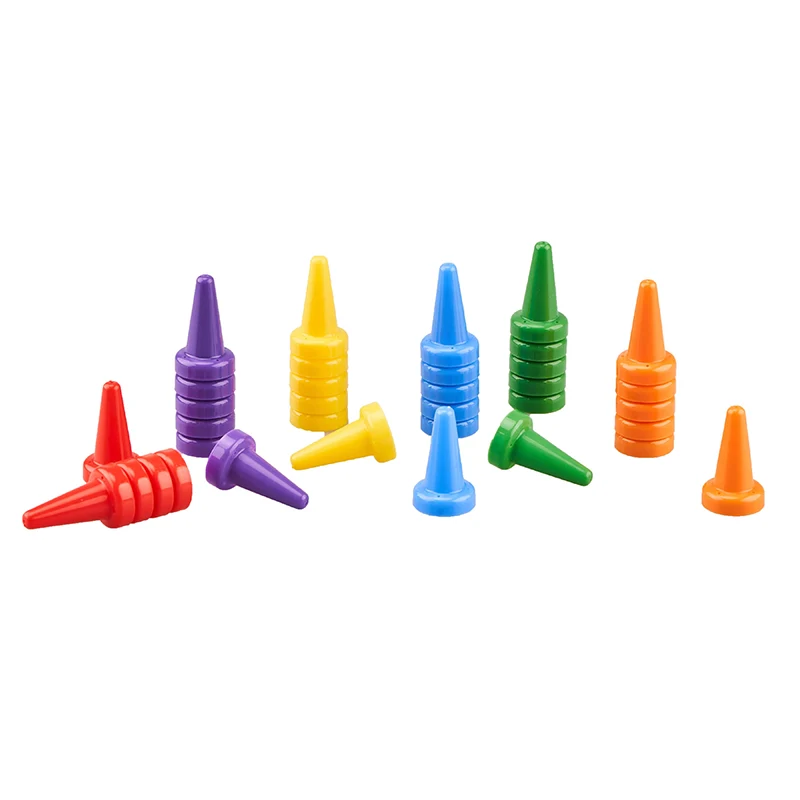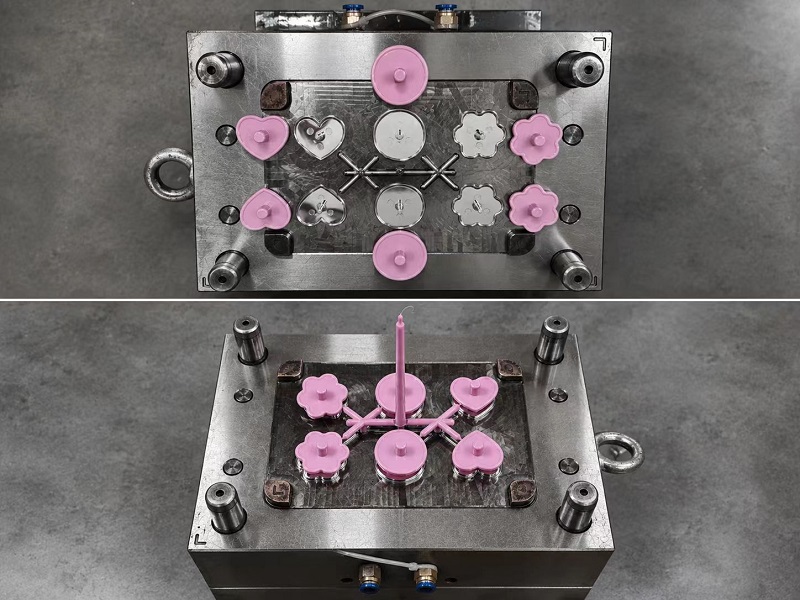
Some plastic components cannot achieve their required structure, appearance, sealing, grip, or functional integration through a single injection molding operation. When a molded part needs an additional material layer, insert, functional feature, or secondary molded section, Secondary Forming Injection Molding can provide a suitable manufacturing approach.
This process is particularly useful when the final component needs to combine different materials or integrate a previously formed component into a molded structure. It can help reduce separate assembly operations while allowing manufacturers to develop parts with more complex functional requirements. Kinghe provides injection molding solutions for customers requiring secondary forming processes for different industrial applications.
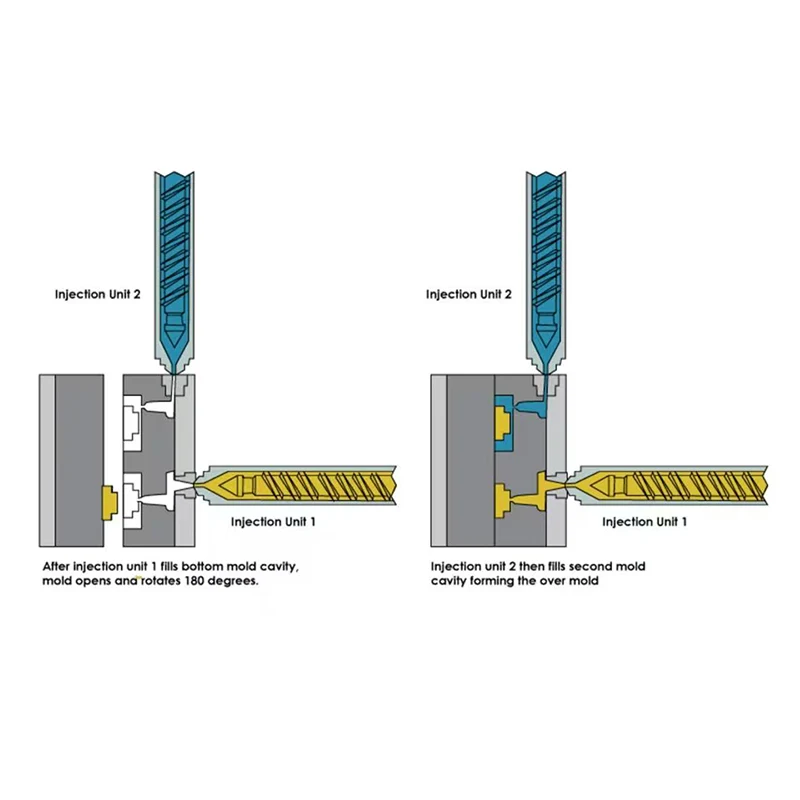
Secondary forming injection molding refers to an injection molding process in which an existing molded component or prepared insert is subjected to another molding operation. A second material or molded section is then formed around or onto the original component.
The first component acts as the substrate, while the second molding stage adds additional material or functionality. Depending on the product design, the secondary material can provide sealing, insulation, protection, grip, structural integration, or other required characteristics.
Different materials can provide different performance characteristics. A rigid plastic may provide structural support, while a softer material can improve grip, sealing, cushioning, or vibration resistance.
The selection of compatible materials is important because the interface between the first and second materials can affect the reliability of the finished component.
Conventional manufacturing may require separate components to be molded first and then assembled using adhesives, fasteners, press-fitting, welding, or other methods. Secondary forming can integrate some of these functions directly into the molding process.
Reducing separate assembly steps can simplify the production flow and reduce the number of individual components that need to be handled during manufacturing.
Secondary molding can combine a substrate and an additional material into one integrated component. This can be useful when a product requires a protective outer layer, sealing area, flexible section, or embedded component.
The final design can therefore provide multiple functions within a single molded assembly rather than relying on several separately manufactured parts.
A secondary material can modify the surface characteristics of an existing molded part. Depending on the material and design, this may provide improved grip, cushioning, sealing, insulation, vibration damping, or environmental protection.
Automotive components often need to withstand vibration, temperature changes, moisture, and repeated mechanical use. Secondary forming can be used when a rigid plastic structure needs an additional sealing, cushioning, insulation, or protective material.
Potential applications include switches, handles, connectors, sensor housings, protective covers, and other components requiring multi-material construction.
Electrical products frequently contain terminals, contacts, wires, connectors, and other components that need to be integrated into plastic housings. Secondary molding can help position and protect these elements within the final component.
For electrical applications, material selection and molding conditions should be evaluated according to insulation, temperature, dimensional stability, and environmental requirements.
Consumer products such as hand-held devices, tools, controls, handles, and household equipment may require different surface characteristics from those provided by a single rigid plastic.
A secondary flexible material can be added to selected areas to improve grip, comfort, impact absorption, or handling performance.
Medical and healthcare products may require integrated structures with specific requirements for cleanliness, material compatibility, chemical resistance, sterilization, and dimensional consistency.
When secondary forming is used for such applications, the selected materials and manufacturing process should be evaluated against the applicable product and regulatory requirements.
Industrial equipment may use secondary molded components for protective covers, seals, grips, vibration-control elements, cable protection, and other functional parts.
The process can be useful when a component must combine rigid structural performance with another material that provides additional protection or flexibility.
The first molding stage produces the primary substrate or base component. Its dimensions and surface features must be controlled because they directly affect the second molding operation.
The substrate may include specific grooves, ribs, holes, undercuts, or other structural features designed to help position the component or improve mechanical retention during secondary molding.
After the first molding stage, the substrate is prepared for the second operation. Depending on the process, preparation may involve cleaning, positioning, inspection, preheating, or transferring the component into another mold.
Accurate positioning is especially important when the second material must cover only a specific area of the substrate.
The second material is injected into the mold around or onto the prepared substrate. The material flows into the designated cavity and forms the required secondary structure.
Injection pressure, temperature, filling speed, cooling conditions, and mold design need to be controlled according to the selected material and product geometry.
After injection, the component is allowed to cool and stabilize before ejection and inspection. The finished part should be checked for dimensional accuracy, bonding or mechanical retention, surface quality, flash, deformation, and other process-related defects.
The first and second materials must be selected according to their physical and processing characteristics. In applications requiring material-to-material adhesion, compatibility between the substrate and secondary material is particularly important.
If the materials do not bond adequately, the finished component may experience separation or other interface problems during service.
The shape of the first molded component influences how the second material flows and remains attached. Grooves, ribs, undercuts, and other geometric features can sometimes improve mechanical retention.
Designing the substrate and secondary layer together during the early product-development stage can help avoid manufacturing problems later.
The second injection process needs to be controlled according to the material's processing window. Excessive temperature, pressure, or injection speed can affect the substrate, while insufficient filling conditions may cause incomplete molding or surface defects.
When an existing component is placed into a mold for secondary forming, its position must be controlled accurately. Misalignment can result in uneven material coverage, dimensional deviation, exposed areas, or inconsistent finished parts.
| Application | Secondary Forming Function |
|---|---|
| Handles and Grips | Add a softer or more comfortable gripping surface |
| Electrical Connectors | Encapsulate or protect contacts and connection areas |
| Sealing Components | Add sealing material around a rigid substrate |
| Automotive Parts | Provide insulation, protection, cushioning, or sealing |
| Industrial Components | Add protective or vibration-resistant material |
| Consumer Products | Improve grip, appearance, comfort, or impact resistance |
| Electronic Housings | Integrate protective or insulating material |
| Evaluation Item | Buyer Consideration |
|---|---|
| Base Material | Confirm the material used for the first molding stage |
| Secondary Material | Check compatibility with the substrate |
| Part Geometry | Evaluate grooves, ribs, undercuts, and other retention features |
| Bonding Requirement | Determine whether chemical adhesion or mechanical retention is required |
| Dimensional Tolerance | Define critical dimensions for both molding stages |
| Surface Finish | Specify texture, appearance, and surface-quality requirements |
| Production Volume | Consider tooling and process requirements according to annual demand |
| Automation | Determine whether substrate loading and transfer should be automated |
| Inspection | Define dimensional, visual, and functional inspection requirements |
| Application Environment | Consider temperature, chemicals, moisture, vibration, and mechanical load |
The mold design should provide a suitable flow path for the secondary material. Poor flow design can lead to incomplete filling, trapped air, weld lines, or uneven material distribution.
The secondary layer should have an appropriate and consistent thickness wherever possible. Significant variations can affect cooling, shrinkage, dimensional stability, and surface appearance.
The secondary molded geometry should allow the finished part to be removed from the mold without damaging the substrate or the newly formed material. Draft angles and ejection locations should therefore be considered during mold development.
If the secondary forming process is intended to replace a separate assembly operation, the complete manufacturing sequence should be evaluated before tooling begins. This includes substrate production, transfer, secondary molding, inspection, and final packaging.
Integrating multiple materials or components into one molded part can reduce the number of individual pieces that need to be handled and assembled.
A controlled molding process can provide more consistent positioning of the secondary material than manual assembly, particularly when suitable tooling and automated loading systems are used.
When the secondary molding process successfully replaces adhesive application, mechanical fastening, or another assembly operation, manufacturers may simplify the production workflow and reduce potential assembly-related variation.
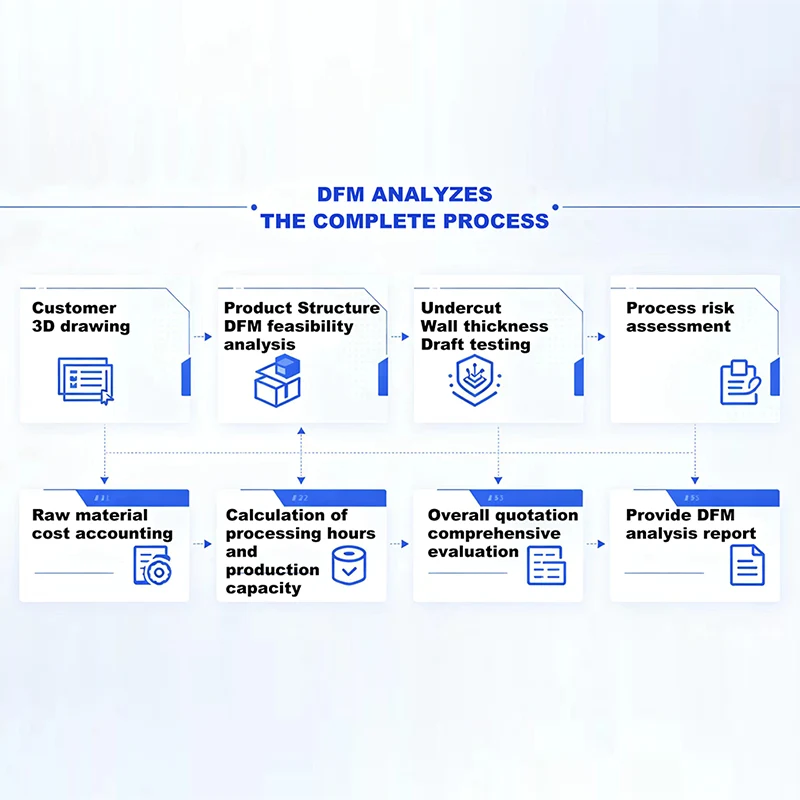
Kinghe can evaluate secondary forming requirements according to the part structure, materials, production volume, dimensional requirements, and intended application. Early process evaluation helps determine whether secondary molding is appropriate for the specific component.
Secondary forming requires coordination between the first molded component, transfer or positioning method, second mold, injection parameters, and inspection process. These factors should be considered together to establish a stable production workflow.
For automotive, electronic, industrial, consumer, and other applications, the required secondary material and molding structure can vary significantly. Kinghe supports customers in evaluating the process according to the functional requirements of the finished component rather than treating secondary molding as a standard one-size-fits-all process.